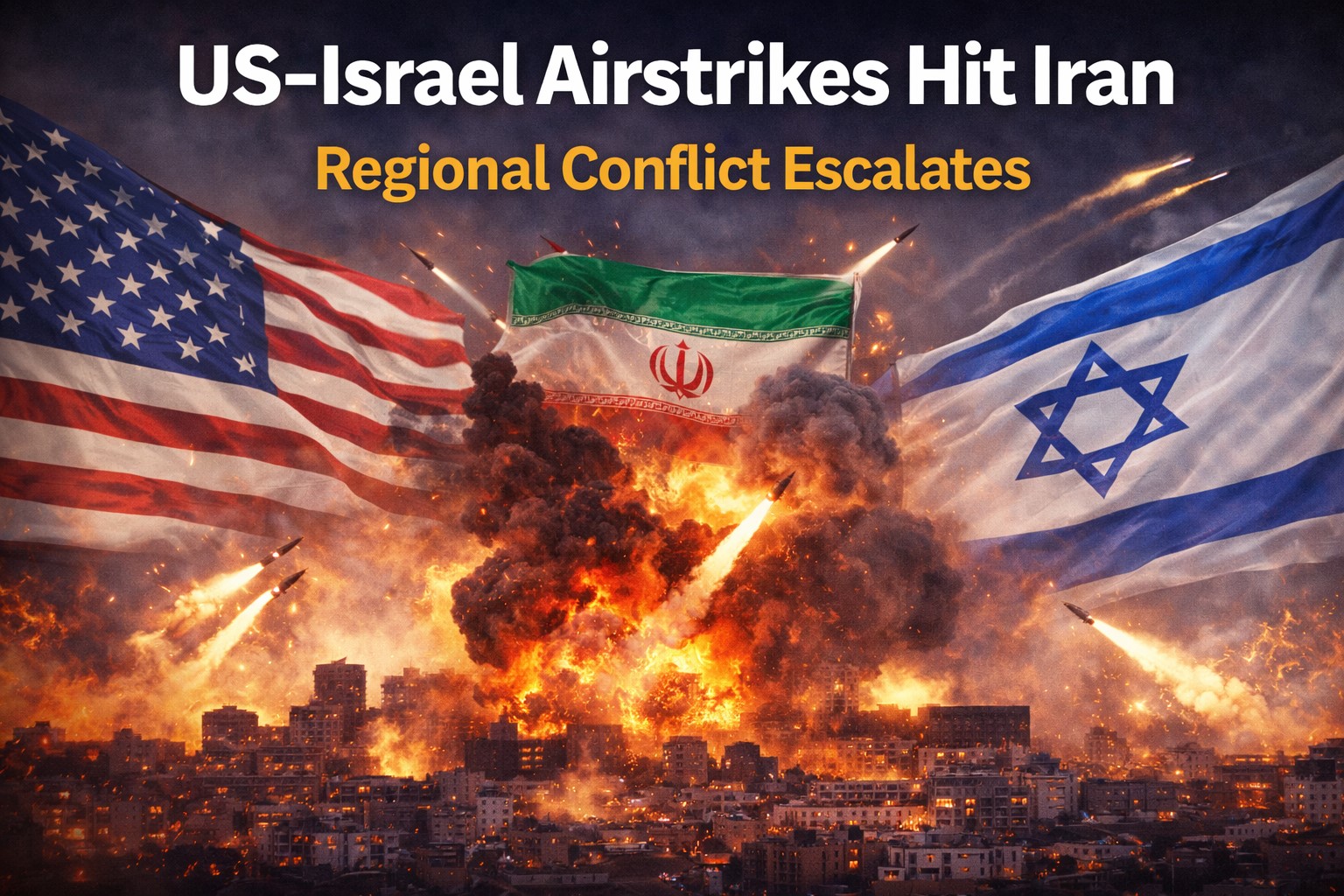
Tehran / Washington / Jerusalem — On February 28, 2026, the United States and Israel launched coordinated military strikes against multiple targets inside Iran, marking one of the most significant escalations in Middle East tensions in recent years. The operation, described by U.S. and Israeli officials as necessary to counter perceived threats from Tehran, has prompted retaliatory attacks, widespread condemnation, and urgent calls for de-escalation from the international community.
Joint Strikes and Military Action
The military offensive began early Saturday when missile and air strikes struck Tehran and other Iranian cities, including areas near key government and military installations. Smoke was seen rising over the Iranian capital, and emergency sirens echoed across the region as explosions rocked multiple locations.
U.S. President Donald Trump confirmed that American forces were participating in what he described as “major combat operations” aimed at eliminating threats posed by Iran’s government and its missile programs. He also urged the Iranian public to “take control of your destiny” and challenged the Islamic Republic’s leadership.
Israeli Prime Minister Benjamin Netanyahu stated that the strikes were coordinated with Washington and aimed at neutralizing an “existential threat” from Tehran’s nuclear and military capabilities. Israeli officials said that pre-emptive action was necessary after months of stalled diplomatic negotiations.
Iran’s Retaliation
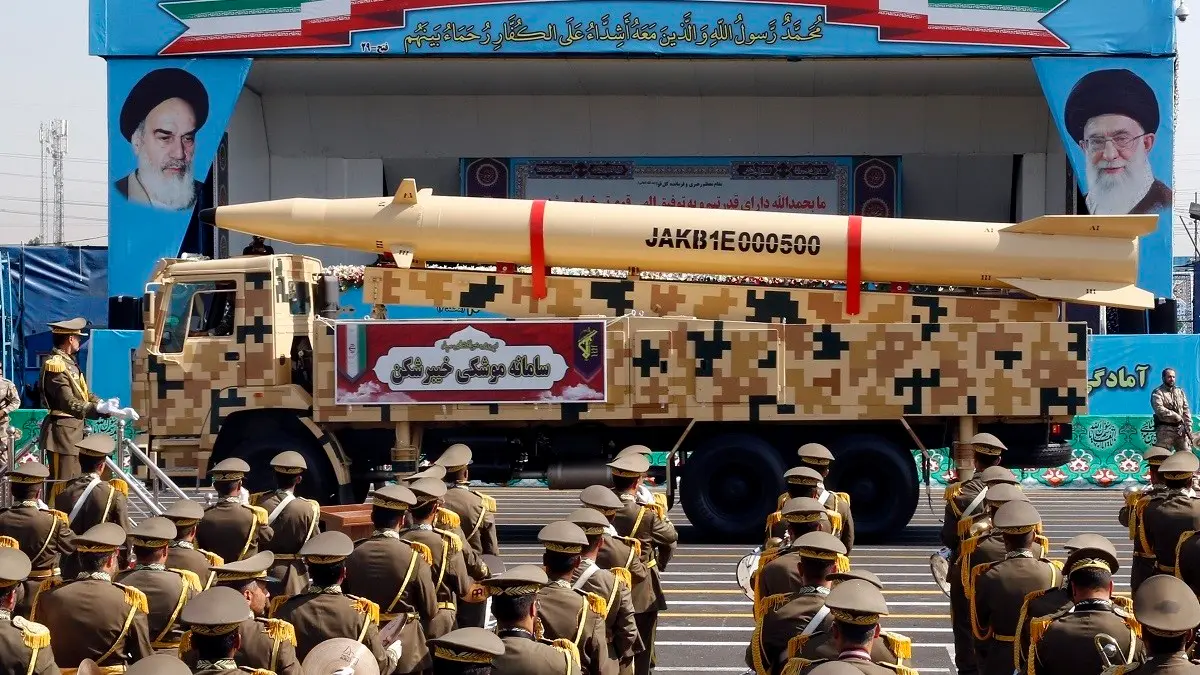
In turn, Iranian military forces launched missiles and drones toward Israeli territory and U.S. bases in the Gulf region, including Qatar, Bahrain, and Kuwait. Tehran’s government has condemned the joint attack as illegal and pledged a “crushing response” against what it called a violation of international law.
Iran also closed its airspace indefinitely and bolstered air defenses amid fears of further escalation. The Iranian Foreign Ministry accused the U.S. and Israel of undermining long-standing nuclear negotiations and breaching the United Nations Charter.
Civilian Impact and Reports From the Ground
Reports emerging from Iranian media and international outlets indicate significant damage within Tehran and other cities, with smoke rising over residential and military areas. Satellite imagery and on-the-ground accounts point to structural damage and disruption of daily life as civilians seek shelter.
Global Reactions and Diplomatic Strain
The strikes have drawn widespread reactions around the world. Russia strongly condemned the action as an “unprovoked act of armed aggression” and called for a return to diplomatic channels. Other countries, including some European nations, have urged restraint and expressed deep concern over the potential for broader conflict.
Risk of Regional Escalation
Analysts warn that the situation remains highly volatile. The joint attacks by U.S. and Israeli forces, which followed months of military buildup and stalled nuclear talks, may draw in additional players across the Middle East. International observers are closely monitoring whether further retaliation from Iran or allied groups could trigger a wider regional conflict.