International Outcry Over Sentencing of Imaan Mazari and Hadi Ali Chattha in Pakistan
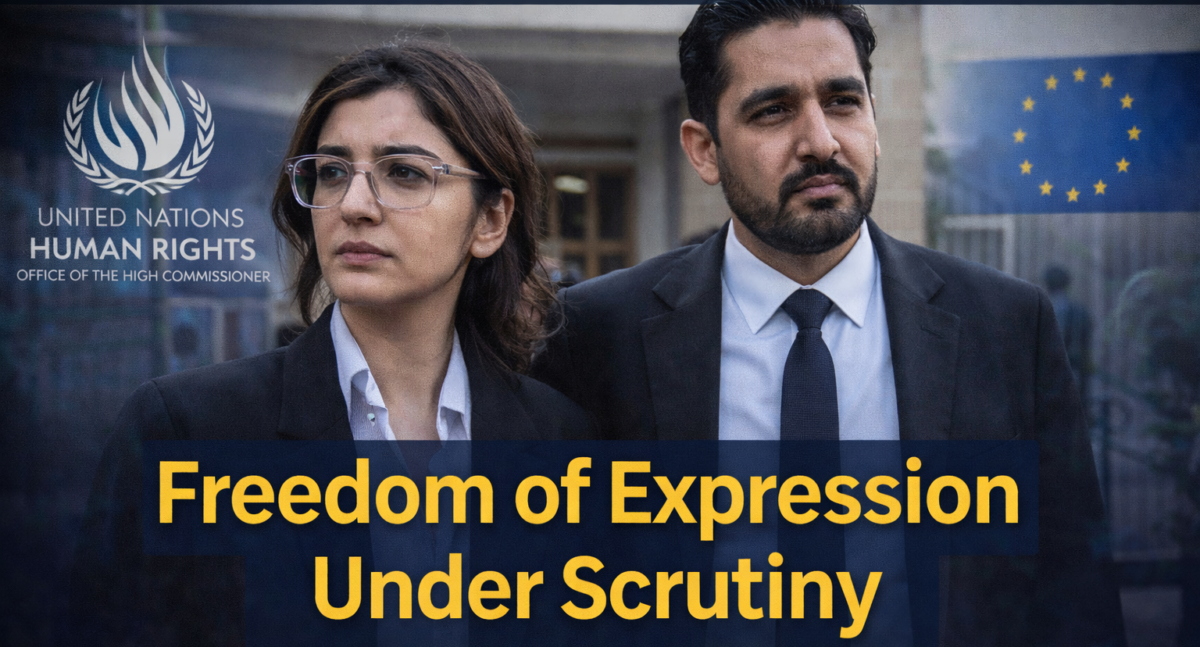
Islamabad — Major international human rights bodies have expressed deep concern over the 17-year prison sentence handed down by a Pakistani court to human rights lawyers Imaan Zainab Mazari-Hazir and Hadi Ali Chattha, saying the verdict raises worrying questions about freedom of expression, due process, and the rule of law in Pakistan.
The couple were convicted on January 24, 2026, by a District and Sessions Court in Islamabad under sections of the Prevention of Electronic Crimes Act (PECA), including allegations linked to social media posts deemed “anti-state”. They were sentenced to a combined 17 years in prison and ordered to pay hefty fines, a move that has drawn sharp criticism both domestically and internationally.
International Objections
The United Nations Human Rights Office called the conviction “deeply disturbing” and highlighted serious fair trial concerns, including restrictions on the couple’s legal representation and alleged procedural irregularities during the proceedings. The UN body emphasized that the case underscores the risk of PECA being used to “suppress dissent” rather than protect legitimate online expression.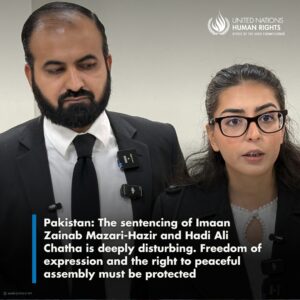 A coalition of international legal organisations — including the International Commission of Jurists and the International Bar Association’s Human Rights Institute — issued a joint statement condemning the “arbitrary arrest and conviction” of the couple, urging Pakistani authorities to uphold international human rights obligations, particularly those related to legal independence and freedom of expression.
Similarly, the European Union warned that the sentencing contradicts democratic principles Pakistan has pledged to uphold. EU officials stressed that freedom of expression and the independence of legal professionals are core aspects of international human rights commitments.
Pakistan’s Official Response
In response to mounting criticism, Pakistan’s Foreign Office described the case as an “internal affair” and defended the judicial process, noting that the couple retains the right to appeal within the domestic legal system. Islamabad also distanced itself from a controversial comment made by the trial judge regarding the designation of “terrorist states”, stressing it reflected the judge’s personal opinion, not official foreign policy.
Domestic Legal and Civil Rights Context
Legal experts and human rights advocates inside Pakistan have similarly challenged the verdict, calling it disproportionate and harmful to civil liberties. Critics assert that PECA has been increasingly used to target dissenting voices and activists, undermining trust in independent judicial institutions.
The case has reignited debate over the balance between cybersecurity laws and constitutional protections for freedom of expression, as well as Pakistan’s commitments under international treaties such as the International Covenant on Civil and Political Rights (ICCPR).